
What Does a Roof Inspection Include? Your Complete Central Pennsylvania Checklist for 2026
So you’re wondering, “What does a roof inspection include?” You’re not alone. Thousands of homeowners across Central Pennsylvania ask this question every year before booking their first professional evaluation.
Here’s the short answer: a qualified roofer examines every part of your roofing system, from the shingles on top to the insulation in your attic. They check for damage, wear, leaks, and structural problems that could turn into expensive repairs if left alone.
But there’s more to it than a quick glance at your shingles.
Pennsylvania’s climate puts serious stress on residential roofs. Heavy snow loads, ice dams, freeze-thaw cycles, wind-driven rain, and summer humidity all take their toll season after season. An annual roof inspection catches problems early, before a small crack becomes a major leak.
This guide breaks down exactly what a professional roofer looks for during an inspection, what it costs, how often you need one, and a full roof inspection checklist built for Central PA homeowners.
If something feels off with your roof, schedule a professional inspection with Moonshot Roofing before it gets worse.
What Is a Professional Roof Inspection?
A professional roof inspection is a detailed evaluation of your entire roofing system. A licensed roofing contractor examines both the outside and inside of your roof to identify damage, aging materials, and potential leak points.
This is not the same as a quick visual check from the driveway.
A trained inspector walks the roof surface, checks the attic space, evaluates the structural framing, and tests drainage components. The whole process usually takes 45 minutes to 2 hours, depending on the size, pitch, and complexity of your roof.
At the end, you get a written report with photos, a condition rating for each component, and clear recommendations. Some inspections also include drone footage or thermal imaging for areas that are hard to reach.
A general home inspector may glance at your roof from a ladder during a home sale. That’s helpful, but it doesn’t replace a focused inspection from a licensed roofing contractor who knows exactly what to look for.
Why Central Pennsylvania Homeowners Need an Annual Roof Inspection
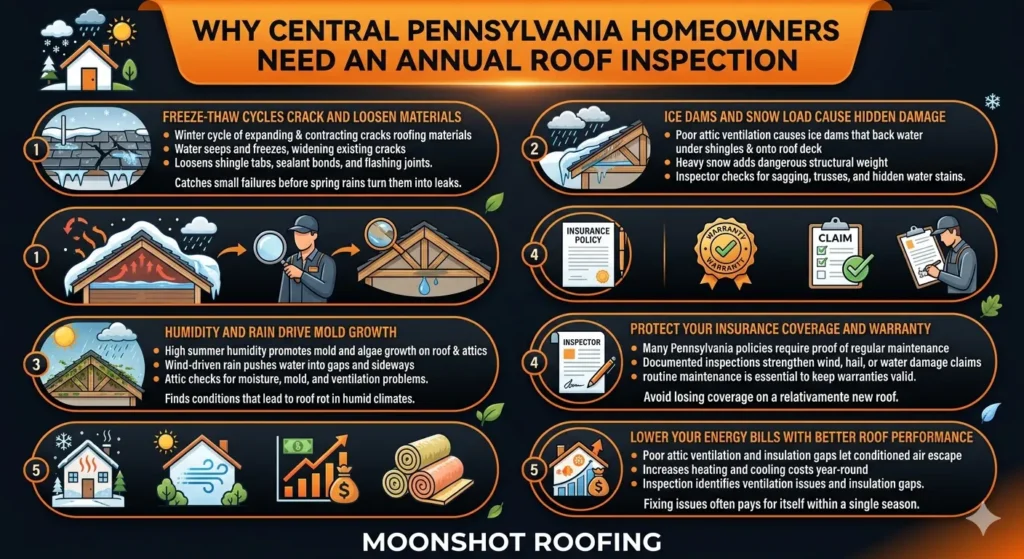
Your roof handles more punishment than any other part of your home. And in Central Pennsylvania, the weather doesn’t take a break. Each season brings a different type of stress to your roofing materials.
Freeze-Thaw Cycles Crack and Loosen Roofing Materials
Pennsylvania winters bring repeated freeze-thaw cycles that expand and contract roofing materials dozens of times each season. Water seeps into tiny cracks during the day, freezes overnight, and forces those cracks wider.
Over time, this loosens shingle tabs, breaks sealant bonds, and weakens flashing joints. An annual inspection catches these small failures before spring rains turn them into active leaks.
Ice Dams and Snow Load Cause Hidden Damage
When snow builds up on a roof with poor attic ventilation, the heat from below melts the bottom layer. That water runs down to the cold eaves, refreezes, and forms an ice dam. The trapped water backs up under shingles and soaks into your roof deck.
Heavy snow also adds weight to your structure. A trained inspector checks for sagging, stressed trusses, and water stains that signal past ice dam damage you may not see from the ground.
Humidity and Rain Drive Mold Growth
Central PA summers bring humidity levels that promote mold and algae growth on roof surfaces and inside attics. Wind-driven rain from spring and summer storms can push water sideways under flashing and into gaps that look sealed from above.
A professional inspection includes checking your attic for moisture, mold, and poor ventilation, which are the three conditions that lead to roof rot in humid climates.
Protect Your Insurance Coverage and Warranty
Many homeowner insurance policies in Pennsylvania expect proof of regular roof maintenance. A documented annual inspection creates a paper trail that strengthens your position if you ever file a claim for wind, hail, or water damage.
It also keeps manufacturer warranties valid. Most shingle warranties require routine maintenance. Without inspection records, you could lose coverage on a roof that’s only a few years old.
Lower Your Energy Bills With Better Roof Performance
Poor attic ventilation, damaged insulation, and gaps in your roof system let conditioned air escape. In winter, that means higher heating costs. In summer, your AC works harder.
A roof inspection identifies ventilation problems, insulation gaps, and compromised seals that silently drive up your energy bills. Fixing these issues often pays for itself within a single season.
What Does a Roofer Look for During a Roof Inspection?
A thorough inspection covers five key areas: exterior surfaces, interior and attic, structural integrity, drainage, and workmanship. Here’s what your roofer checks in each one.
Exterior Roof Inspection
The exterior evaluation is the most visible part of the process. Your inspector walks the roof surface and examines every component exposed to the weather.
- Shingles and surface materials: The inspector looks for cracking, curling, buckling, blistering, and missing shingles. Granule loss is a major indicator of aging. If you see dark granules collecting in your gutters, your shingles are breaking down. On metal roofs, the inspector checks for rust, loose seams, and lifted panels.
- Flashing: Metal flashing seals the joints around chimneys, vents, skylights, and wall connections. Your roofer checks for bent, rusted, detached, or improperly sealed flashing. Failed flashing is one of the top causes of roof leaks in Central Pennsylvania homes.
- Ridge caps: These cover the peak of your roof where two slopes meet. Cracked or missing ridge caps let water flow directly into the roof deck.
- Pipe boots and sealants: Rubber boots around plumbing vent pipes crack and deteriorate over time, especially after years of UV exposure and freeze-thaw stress. Your inspector checks every sealant point and caulk line for gaps.
- Fascia, soffit, and eaves: These components protect the edges of your roof and support proper airflow. Rot, peeling paint, or pest damage in the fascia or soffit can indicate moisture intrusion from above.
Interior and Attic Inspection
Not all roof damage shows up on the outside. The interior check is just as important.
Your inspector examines ceilings and walls for water stains, discoloration, and bubbling paint. These are signs of active or past leaks.
In the attic, the inspector looks for daylight coming through the roof deck, which means there’s a hole or gap somewhere above. They also check for mold, mildew, and wood rot on the underside of the deck and along rafters.
Insulation condition gets evaluated during this step. Compressed, wet, or missing insulation reduces your home’s energy efficiency and can signal a leak source.
Ventilation is critical. The inspector confirms that intake vents (in the soffits) and exhaust vents (at the ridge or through turbines) are open, clear, and balanced. Poor ventilation traps moisture and heat, which shortens your roof’s life significantly.
Structural Inspection
The structural evaluation looks at the bones of your roofing system.
Your inspector checks for a sagging roofline, which can indicate weakened decking, overloaded trusses, or water damage to the framing. They examine the roof deck (plywood or OSB sheathing) for soft spots, warping, and delamination.
Rafters and trusses get inspected for cracking, splitting, or signs of past insect damage. In older Central Pennsylvania homes, original framing may show wear from decades of snow loads.
Gutter and Drainage System Check
A roof is only as good as its ability to shed water. The drainage inspection makes sure water moves off your roof and away from your foundation.
Your roofer checks gutters for clogs, sagging, and proper slope toward downspouts. They verify that downspouts direct water at least 4 to 6 feet from the foundation.
For homes with flat or low-slope roof sections, the inspector looks for standing water (ponding), blocked drains, and membrane deterioration around drainage points.
Shingle granules in the gutter troughs are a red flag. They signal accelerated shingle aging and usually mean a replacement conversation is coming. Learn more about how to tell if your roof needs repair or replacement.
Workmanship and Installation Quality
Even new roofs can have problems if they were installed incorrectly. Your inspector evaluates the quality of the original installation and any previous repairs.
They check flashing overlaps, nail placement, shingle alignment, and seam integrity. Improperly driven nails that sit too high (nail pops) are a common defect that creates leak paths.
Code compliance matters too. Your roofer verifies that the installation meets current building standards for your municipality. Poor workmanship is one of the most common causes of premature roof failure, and it often hides in plain sight until a professional takes a close look.
Central Pennsylvania-Specific Issues Inspectors Check For
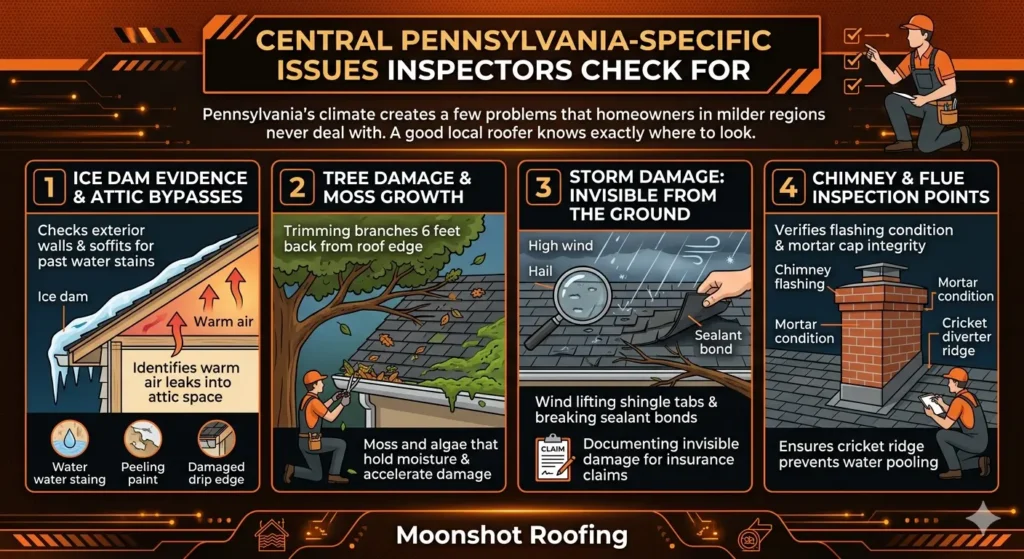
Pennsylvania’s climate creates a few problems that homeowners in milder regions never deal with. A good local roofer knows exactly where to look.
Ice Dam Evidence and Attic Bypasses
Ice dams don’t just disappear in spring. They leave evidence: water staining along exterior walls near the eaves, damaged drip edge, peeling paint on soffits, and moisture-stained insulation in the attic. Your inspector checks for all of these markers, even months after the ice is gone.
Attic bypasses, which are gaps where warm interior air leaks into the attic space, are a major contributor to ice dam formation. A thorough inspection identifies these trouble spots.
Tree Damage and Moss Growth
Central PA is heavily wooded. Overhanging branches scratch shingle surfaces, drop leaves that clog gutters, and create shaded areas where moss and algae thrive.
Moss holds moisture against your shingles and accelerates deterioration. Your inspector notes areas of heavy growth and may recommend trimming branches back at least 6 feet from the roof edge.
Storm Damage You Can’t See From the Ground
Hail, high winds, and falling branches cause damage that often isn’t visible without getting on the roof. Hail dimples in shingles weaken the granule layer. Wind lifts shingle tabs and breaks sealant bonds underneath.
If a recent storm hit your area, a professional inspection documents the damage for insurance purposes. Moonshot Roofing helps homeowners through the storm damage restoration process, from inspection to claim filing.
Chimney and Flue Inspection Points
Many Central Pennsylvania homes have chimneys. Your roofer checks the chimney flashing, the mortar condition on the cap and crown, and the cricket (a small diverter ridge behind the chimney that prevents water from pooling). Deteriorating chimney components are a leading cause of slow, hard-to-find leaks.
Types of Roof Inspections Available in Central PA
Not every inspection uses the same method. Here are the three main approaches and when each makes sense.
| Inspection Type | What It Covers | Best For | Typical Cost |
| Physical/Visual | Full hands-on evaluation of interior, exterior, and structure | Annual maintenance, pre-sale/purchase | $150 to $300 |
| Drone | High-resolution aerial images of exterior surfaces | Steep pitch, fragile materials, limited access | $200 to $400 |
| Infrared/Thermal | Moisture detection beneath surfaces using thermal imaging | Hidden leaks, insurance claims, and older roofs | $400 to $600 |
How Much Does a Roof Inspection Cost in Central Pennsylvania?
Most professional roof inspections in Central Pennsylvania cost between $150 and $350. The price depends on your roof’s size, pitch, material, and the inspection method you choose. Infrared inspections typically run $400 to $600 because of the specialized equipment involved.
Moonshot Roofing offers honest, transparent roof inspections with no obligation. You get a written report, photo documentation, and clear recommendations you can trust.
How Often Should You Get Your Roof Inspected?
At a minimum, schedule a professional annual roof inspection. Twice a year (spring and fall) is ideal for roofs older than 10 years.
Beyond the annual schedule, book an inspection in these situations:
- After a major storm with high winds, hail, or heavy snowfall
- Before buying or selling a home
- After any renovation that involved rooftop work (HVAC installation, solar panels, antenna mounting)
- When you notice interior signs of a leak, like water stains or musty smells
- If your roof is approaching the end of its expected lifespan (20 to 25 years for asphalt shingles)
Spring inspections catch winter damage before rain season. Fall inspections confirm your roof is ready for snow, ice, and freezing temperatures.
Roof Inspection Checklist for Central Pennsylvania Homeowners
Use this checklist as a reference for what a comprehensive inspection should cover. If your roofer skips any of these items, ask why.
- Shingles or roofing material: cracking, curling, buckling, blistering, or missing pieces
- Granule loss is visible in gutters or on the ground below drip lines
- Flashing condition around chimneys, vents, skylights, and wall junctions
- Ridge cap integrity along every peak and hip
- Pipe boot seals and caulking at all penetration points
- Fascia board condition for rot, peeling, or pest damage
- Soffit panels for damage, gaps, or blocked ventilation openings
- Gutter alignment, clogs, and downspout positioning
- Drip edge condition along eaves and rakes
- Attic inspection: water stains, mold, rot, daylight penetration
- Insulation condition, depth, and coverage
- Ventilation balance: intake vents clear and exhaust vents functional
- Roof decking: sagging, soft spots, delamination
- Rafters and trusses: cracking, splitting, insect damage
- Ice dam evidence: staining near eaves, damaged drip edge, compressed insulation at perimeter
- Chimney flashing, mortar, cap, and cricket condition
- Tree damage: scratches, moss growth, overhanging branches
- Previous repair quality and code compliance
- Overall roof age compared to the expected lifespan for the material type
- Written report with photos, condition ratings, and prioritized recommendations
Frequently Asked Questions About Roof Inspections
What does a roof inspector look for?
A professional inspector checks exterior surfaces (shingles, flashing, ridge caps, gutters), interior spaces (attic, ceilings, walls), structural elements (decking, rafters, trusses), and drainage systems. In Central Pennsylvania, inspectors also look for ice dam evidence, freeze-thaw damage, moss growth, and chimney deterioration.
How long does a roof inspection take?
Most residential inspections take 45 minutes to 2 hours. Larger homes, steep-pitch roofs, and properties with multiple roof planes may take longer. Infrared inspections add extra time for thermal scanning.
Is a free roof inspection worth it?
Yes, when it comes from a reputable local company. Be wary of storm-chasing contractors who knock on doors after severe weather and pressure you into signing a contract on the spot. A trustworthy roofer hands you a written report and lets you decide on your own timeline.
How often should I get my roof inspected in Pennsylvania?
At least once per year. Twice per year (spring and fall) is recommended for roofs over 10 years old. Always schedule an extra inspection after major storms.
Does a home inspection include a roof inspection?
A general home inspection includes a basic roof evaluation, but it’s usually done from the ground or from a ladder. It doesn’t replace a dedicated inspection by a licensed roofing contractor who walks the surface, enters the attic, and examines every component up close.
Can I inspect my own roof?
You can check your attic for water stains and look at your roof from the ground with binoculars. But climbing onto a roof without proper safety equipment is dangerous, and untrained eyes miss the subtle signs of damage that lead to expensive problems later. Leave the hands-on work to a professional.
What happens if my roof fails inspection?
Your inspector provides a report listing every issue found, ranked by urgency. You’re not required to act immediately, but addressing problems early prevents small repairs from becoming full replacements. The report also serves as documentation for insurance claims if storm damage is involved.
Schedule Your Roof Inspection With Moonshot Roofing Today
Now you know exactly what a roof inspection includes, and why it matters for every homeowner in Central Pennsylvania. From shingles and flashing to attic ventilation and structural framing, a professional evaluation covers every layer of your roofing system.
Pennsylvania’s harsh winters, spring storms, and humid summers put constant stress on your roof. An annual roof inspection catches problems while they’re still small and affordable to fix.
Moonshot Roofing provides thorough, honest roof inspections throughout the Central Pennsylvania region. You get a detailed written report with photos, clear recommendations, and zero pressure. Whether you need a routine checkup, post-storm evaluation, or pre-sale assessment, our licensed team is ready to help.
Call (717) 864-5934 to schedule your inspection today, or visit our roof inspection page to learn more about the process.